
Paducah Directory Runs and Records
The McCracken County Public Library genealogy collection is the main local shelf for Paducah city directories. It reports a run from 1859 to the present, with some years unavailable. The public inventory does not list every publisher, missing year, or reverse section. Call the genealogy room before planning a visit around one exact volume. Two cataloged runs provide firm digital leads, while census, deed, court, vital, newspaper, and map collections supply checks around the printed names.
| Collection | Years | Where Held | Access |
|---|---|---|---|
| Paducah city directories | 1859 to present, with gaps | McCracken library | On site and catalog inquiry |
| Ohio River directory, Paducah material | 1871 to 1872 | FamilySearch catalog, film 940494 item 1 | Image limits may apply |
| City directory and history | 1894 to 1895 | FamilySearch, film 18343 item 1 | Catalog and DGS metadata |
| United States census | 1790 to 1940 on listed library microfilm | Library and NARA | On site and federal access |
| Deeds, marriages, and wills | Beginning in 1825 | Library, County Clerk, KDLA | Microfilm, index, or request |
| Sanborn maps | 1906 to July 1950 | Library of Congress | Online, 80 sheets |
A gap is not proof that no directory was published. It may mean the library lacks that year, the catalog record is incomplete, or access is limited to a film or reading room. Record the title page, year, publisher when visible, and page number for every find. That citation makes a later staff request much easier.
Paducah City Directory Research Desk
The genealogy room at 555 Washington Street holds far more than directories. Its collection includes census microfilm, McCracken deeds, marriages, and wills from 1825, selected court records from 1825 to 1913, Kentucky tax records, area newspapers, vital indexes, photographs, archives, family files, and African American genealogy sources. The McCracken County Genealogical-Historical Society collection is housed there too. These sources help explain a move or identify two residents whose initials look alike.
Start with the library catalog's keyword, title, and author searches. Then call (270) 442-2510 for a shelf check. Ask which Paducah city directory years are present, whether a year has a street section, and which newspaper or obituary reels cover the needed date. The library serves the wider Jackson Purchase as well as McCracken County, a useful reach for families who moved through nearby river counties or across Kentucky's borders.
The library's collection description shows what may be paired in one visit. A directory citation, census household, deed reference, and newspaper notice can turn a brief printed line into a well-supported Paducah family trail.
Two Cataloged Paducah Directories
The 1871 to 1872 Ohio River directory catalog includes Paducah material under film 940494 item 1 and DGS 8331351. It also notes a second Paducah section filmed from a later copy. The 1894 to 1895 city directory and history catalog identifies film 18343 item 1 and DGS 8141026. Catalog metadata proves the works exist, but it does not guarantee that every image can be opened from home.
Search the catalog by place, surname, title, author, subject, or keyword. Apply the Online availability filter when useful. If a camera or access notice blocks the image, save the film, item, and DGS numbers for a library or family-history-center visit. Do not invent an entry from the catalog description. No named resident page was exposed during the official research pass.
Note: A catalog record identifies a volume, while the page image supplies the actual resident evidence.
Decode a Paducah Directory Entry
Read only the fields printed in that volume. A typical entry may show an alphabetic name, spouse in parentheses, occupation or business, home address, telephone number, widow notation, and an owner or renter mark. Older type, initials, and short forms invite mistakes. Photograph or copy the abbreviation key before transcribing the entry, and preserve punctuation that may distinguish a home from a workplace.
| Name | Copy the spelling, initials, and order exactly as printed. |
|---|---|
| Household detail | Record a spouse or widow notation only when shown. |
| Work detail | Treat an occupation or business as a locator clue. |
| Address | Capture the house number, street, and any room or boarding mark. |
| Volume marks | Check the key before calling a symbol an owner or renter mark. |
- Criss-cross directory
- A section arranged by street and house number rather than surname.
- Householder index
- A list focused on the person associated with a home, with coverage that varies by volume.
- Abbreviation key
- The publisher's guide to shortened words and symbols used in that edition.
A Paducah city directory entry is a dated clue, not a permanent address claim. Verify the name through another year or a second record before joining it to a family.
Paducah History Behind the Names
Local history explains why names appear, move, or vanish between editions. The official Paducah history and monuments page places the city in its river, rail, county-seat, and industrial setting. It records incorporation in 1830, city charter status in 1856, and later milestones that shaped household movement. Those dates give useful brackets for newspaper, tax, and directory searches.
The linked city history source shows the local context used beside a directory search.
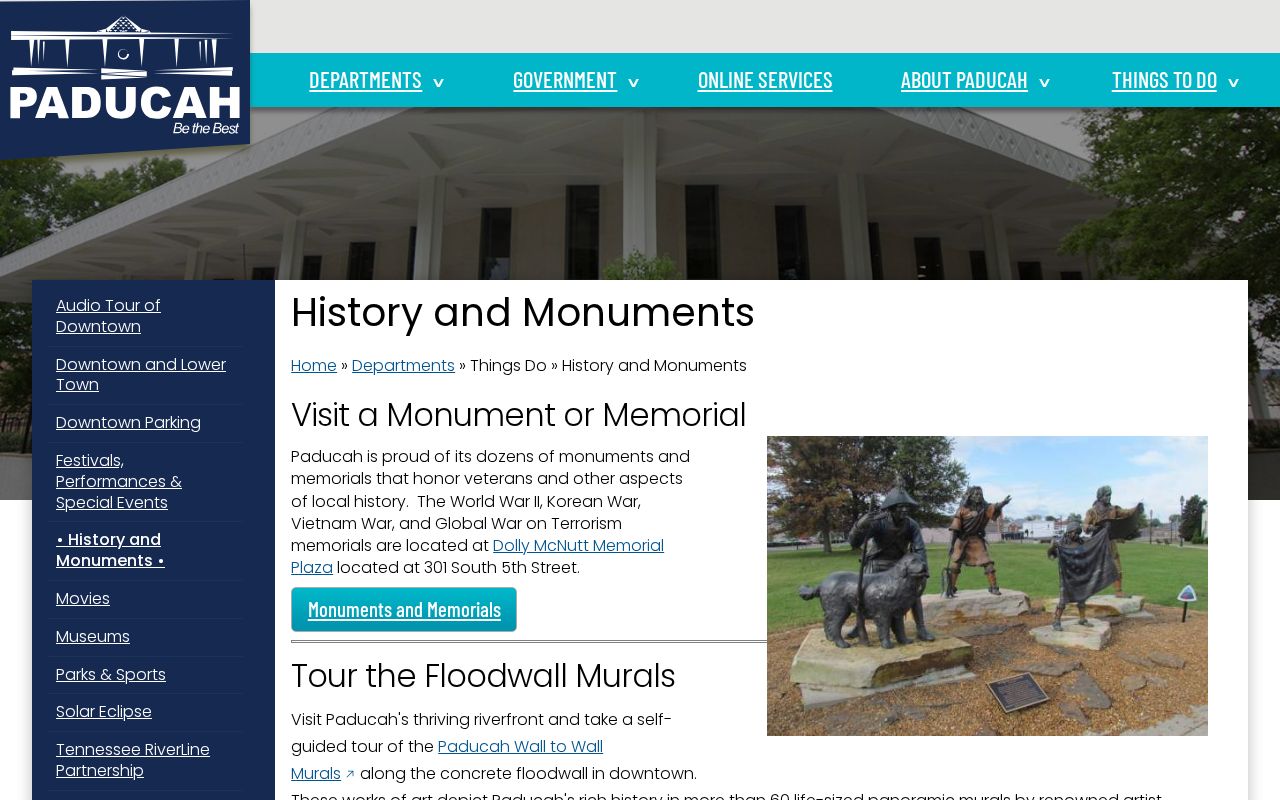
The captured page helps establish an official timeline without turning a broad historical fact into proof about one resident.
| Year | Research marker |
|---|---|
| 1825 | Library and archive descriptions begin local deed, marriage, and will material. |
| 1830 | The original plat and incorporation frame the early city grid. |
| 1859 | The library's reported city directory run begins. |
| 1871 to 1872 | Ohio River directory material includes Paducah. |
| 1894 to 1895 | A cataloged city directory and history survives. |
| 1937 | The flood displaced households and changed address context. |
Paducah Markers Add Record Context
The Kentucky Historical Society Paducah marker index gathers concise official leads on county formation, the original plat, the 1937 flood, river and rail growth, named structures, and local events. It is not a resident roll. Use its dates and places to decide which directory, newspaper, deed, or map year to inspect next.
The marker index presents those Paducah subjects in a browsable official collection.
The image shows the context source, while the original directory page remains the source for a resident listing.
The 1937 flood is especially important. Official history says more than 90 percent of Paducah was inundated and about 27,000 people evacuated. A household may be absent or at a new address after that event. No reviewed source proves that a specific directory or courthouse volume was destroyed, so the flood should explain a search question, not become a claim of record loss.
Map Paducah Directory Addresses
The Library of Congress has an 80-sheet Sanborn run for Paducah from 1906 through July 1950. Sheets can show street names, house numbers, building footprints, lot context, materials, and use. Match a directory address to the map, then compare its block with a deed legal description. This is safer than assuming the present street number has always identified the same structure.
The original 1830 Paducah plat covered twelve blocks between Oak and Fourth, Clark and Jefferson, and the river. That compact early grid makes lot and block references valuable. Later city growth, flood recovery, and postal changes add other geographic layers. A Sanborn sheet locates a building but does not name its occupant.
For a present-day address chain, use the Paducah street directory. Historical city directories remain the stronger tool for household changes between printed years.
Paducah Records Beyond Directories
The Paducah City Clerk is the municipal records custodian. City records may confirm the public setting around a directory address, such as an ordinance, meeting record, or municipal action. County deeds, wills, and court material remain with their proper county or state custodians. Send a narrow request that names the record, date span, street, and known party.
The city clerk page identifies the municipal route shown here.
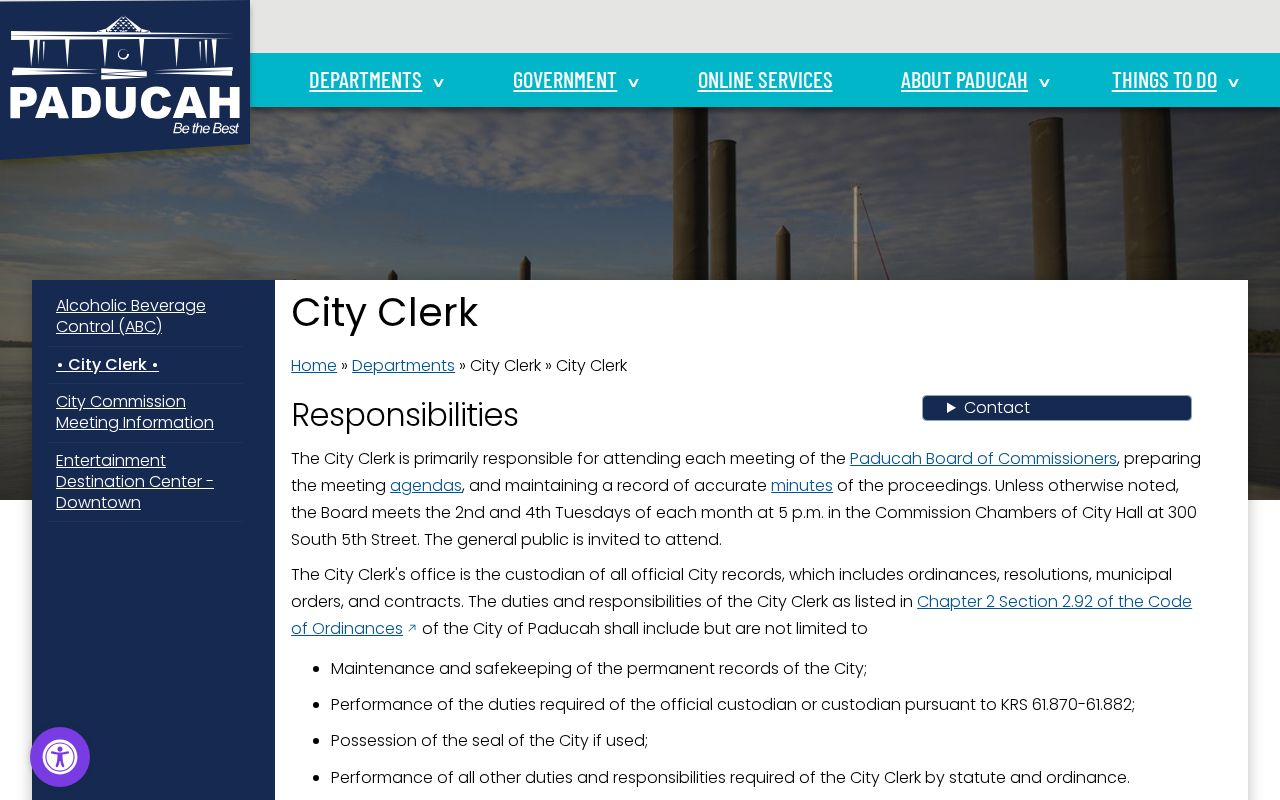
The page capture helps direct a request, but it does not replace the historical volume or county deed cited in the family trail.
Trace Paducah Families by Directory
Follow a household in small, documented steps. Directory years fill the space between federal censuses, while deeds, obituaries, and cemetery records explain ownership and life events. The library lists federal census microfilm through 1940; federal public access follows the 72-year release rule, and the 1950 census is available through NARA even though the local reel should be confirmed.
- Find the earliest Paducah city directory entry that clearly matches the surname, initials, and address.
- Check nearby available years. Leave missing years blank instead of assuming the household stayed.
- Use a confirmed street section when one exists, then compare the alphabetic listing.
- Pair the directory with a census household, deed, tax clue, obituary, probate file, or marriage and death index.
- Close the trail with Oak Grove Cemetery or another original record when a death or departure is indicated.
For African American families, ask for the library's dedicated genealogy and subject files, historical newspapers, church material, tax lists, and original records. Name indexes may omit or misread an entry. A person's disappearance can mean death, a move, a skipped volume, changed initials, remarriage, or a decision not to be listed.