
Paducah Address History Sources
Previous residents of a Paducah address are best traced with overlapping sources. Current parcel data identifies the land and title holder. Deeds carry ownership back through legal descriptions. Directories and census schedules add dated household evidence. Maps and photos show whether the structure itself existed. The published coverage below is a starting range, not a promise that every year or address survives.
| Source | Years It Covers | Where Held | What It Shows |
|---|---|---|---|
| PVA parcel record | Modern roll and dated history | McCracken PVA and Qpublic | Owner, mailing and situs addresses, sale, prior owner, structure |
| Deeds and related instruments | Local deeds from 1825; KDLA inventory through 1995 | County Clerk, eCCLIX, KDLA, library | Grantor, grantee, legal description, source of title |
| Paducah directories | 1859 to present, with gaps | McCracken County Public Library | Dated names, addresses, household or business clues |
| Federal census | Released schedules through 1950 | Library and NARA resources | Household members, relationships, age, and enumeration context |
| Sanborn maps | 1906 through July 1950 | Library of Congress | Footprint, use, material, street and block context |
| PVA images | 1950s photos; aerials from 1938 onward | McCracken PVA | Dated view of structure and lot |
For a recent search, start with PVA and the current deed. For the middle twentieth century, pair directories with PVA photos, aerials, permits, and the census. For the nineteenth century, rely on deed books, plats, directories that survive, census geography, newspapers, and archival microfilm. Always carry the lot and block backward when the house number fails.
Fix the Paducah Parcel First
The current parcel provides four distinct keys: situs, mailing address, parcel ID, and legal description. The situs is the physical place. The mailing address is where the tax bill goes and may be elsewhere. The parcel ID is the current administrative key. The legal description names the land by lot, block, subdivision, metes and bounds, or an earlier record, and is usually the most durable key for previous residents research.
The McCracken PVA says its property workflow can yield owner, purchase date and price, previous owner, parcel size and lines, structure facts, permit history, photographs, and sale or assessment history. Search Qpublic, call (270) 444-4712, visit 621 Washington Street, Suite 105, or make a narrow written request. GIS lines are approximate, and the deed controls exact legal dimensions.
Write down what the record actually calls each field. A mailing address is not proof that the owner occupied the Paducah house. January 1 ownership controls the tax bill, so compare the record date with the deed date before treating a name as current.
Trace McCracken Deeds Backward
The McCracken deed chain is the ownership spine of an address history. A deed must identify its parties, mailing addresses, consideration, legal description, source of title, preparation and return address, and tax address. Those fields let a researcher test whether two instruments concern the same land even when the street number changes.
- Pull the current owner, parcel ID, sale date, previous-owner clue, and full legal description from the PVA record.
- Search the current owner as grantee near the sale date. Confirm the source of title and legal description in the deed image or certified copy.
- Read the grantor, then search that seller as grantee in an earlier instrument. Follow lot, block, and prior book references.
- Check correction deeds, plats, easements, mortgages, releases, wills, and affidavits of descent when the title path is not a simple sale.
- When online coverage ends, move to the Clerk vault, KDLA microfilm, library microfilm, or a specific open-records request.
- Grantor and grantee
- The grantor transfers an interest; the grantee receives it.
- Chain of title
- The linked series of instruments showing how ownership passed over time.
- Legal description
- The land description that remains useful when a street name or number changes.
The McCracken County Clerk deed page explains the record requirements behind this chain.
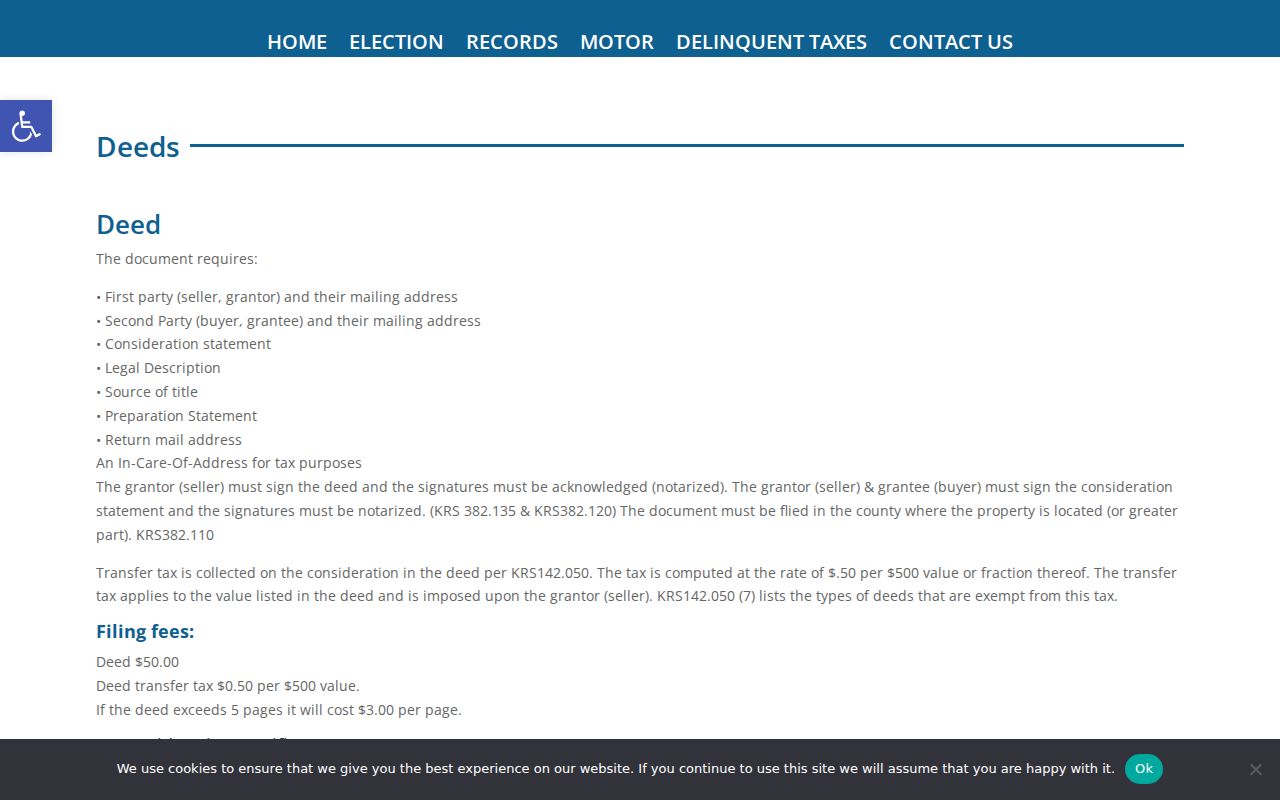
The captured deed guidance shows why party names, title source, tax address, and legal description must all be transcribed.
Paducah Deed Access Channels
The county points to eCCLIX for online recorded instruments. It requires an account, and paid single-day and monthly options are displayed. The county says a personal noncommercial account may run up to five searches daily, but the current sign-up page showed a conflicting message of zero searches per day. Verify the terms before relying on access. Exact McCracken start dates and image cutoffs were not exposed.
The eCCLIX availability page is the source for county-specific record coverage.
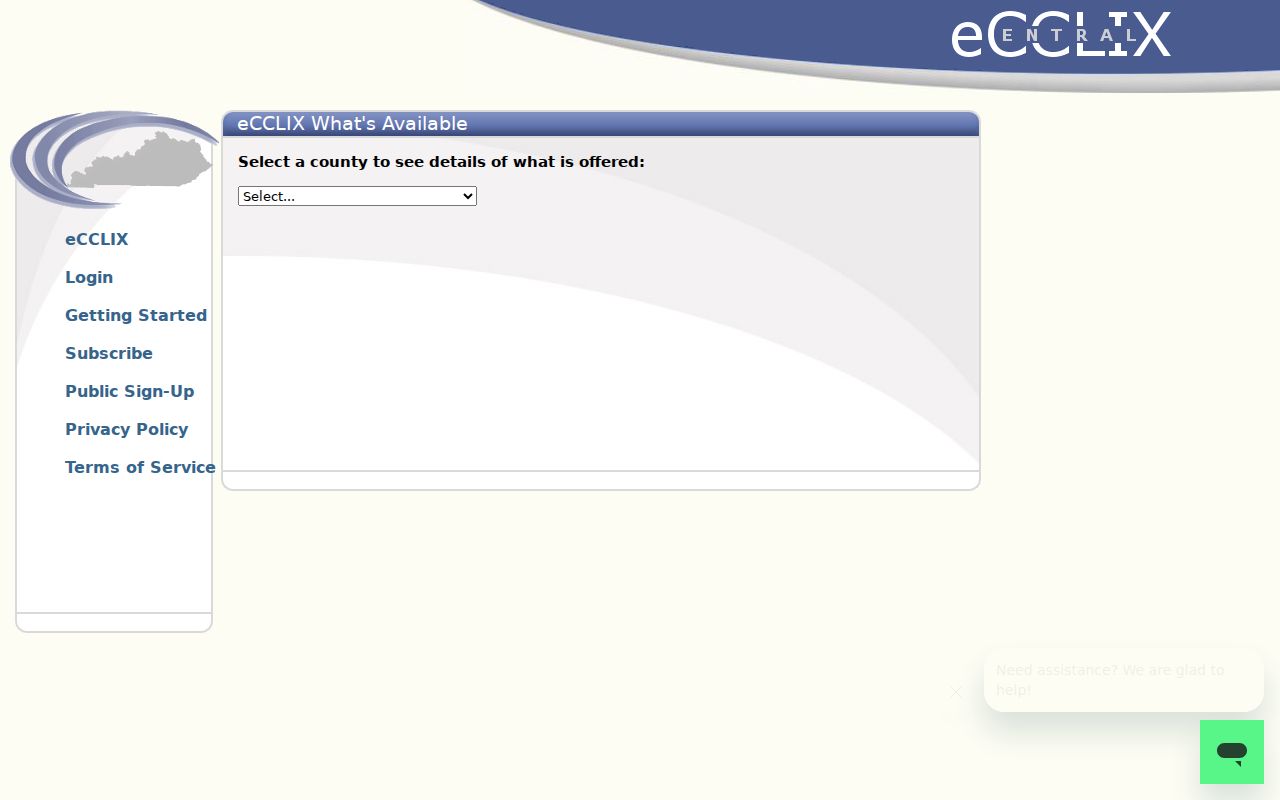
The screenshot confirms the coverage-check route but does not justify inventing a digital start year.
If online access falls short, call the Records Vault at (270) 448-1540, visit or mail the clerk at 300 Clarence Gaines Street, or request a specific record under KRS 61.870 through 61.884. The clerk policy says a response is due within five working days, excluding weekends and legal holidays. Library and KDLA microfilm extend the route into older years.
Paducah Directories Meet Census
The McCracken County Public Library reports Paducah directories from 1859 to the present, with years unavailable. Catalog metadata confirms 1871 to 1872 and 1894 to 1895 material. The collection is paired with family files, photographs, newspapers, and microfilm, making it especially useful for asking who lived here before, not merely who owned the lot.
- Find the address or household in the closest surviving directory year and copy the entry exactly.
- Move to the prior and next available volumes, noting changes in house number, spouse, occupation, or household name.
- Pair the directory with the closest released federal census schedule and identify the correct enumeration area.
- Check newspapers, obituaries, cemetery records, and probate only after the identity is anchored by dates and relationships.
A criss-cross directory is arranged by address rather than only by surname. An enumeration district is the small geographic area assigned to a census taker. Exact reverse-directory runs were not established, so ask library staff which Paducah volumes include a street section. The broader collection belongs on the Paducah city directory page.
Paducah Maps and House Photos
Sanborn fire-insurance maps cover Paducah from 1906 through July 1950 across 80 sheets. They record building footprints, use, construction material, street names, and block context. A structure shown on one sheet and missing on the next helps date change, but the map does not name its occupant.
PVA material lists historic aerials for 1938, 1950, 1952, 1964, 1981, 2001, 2008, and newer years, plus 1950s tax assessor photographs searchable by street name. Compare a dated image with the legal parcel and directory entry. A photo caption or old card may preserve an earlier number, while cross streets help confirm that the same lot is in view.
Paducah's 1937 flood inundated more than 90 percent of the city and displaced about 27,000 people. The floodwall was built from 1939 to 1949. That history may explain a missing structure or household move, but no official source reviewed identified a destroyed county record book. Keep the flood as context unless a named record ties it to the property.
Kentucky Genealogy Endpoints
Once a named household is anchored to the address, death, obituary, cemetery, and probate sources may explain where the trail ends. Kentucky's statewide vital genealogy guidance describes certificates beginning in 1911, with restrictions and application rules depending on the record. Earlier facts may require county, church, cemetery, newspaper, or family sources rather than a central certificate.
The Kentucky vital genealogy page gives the official route.
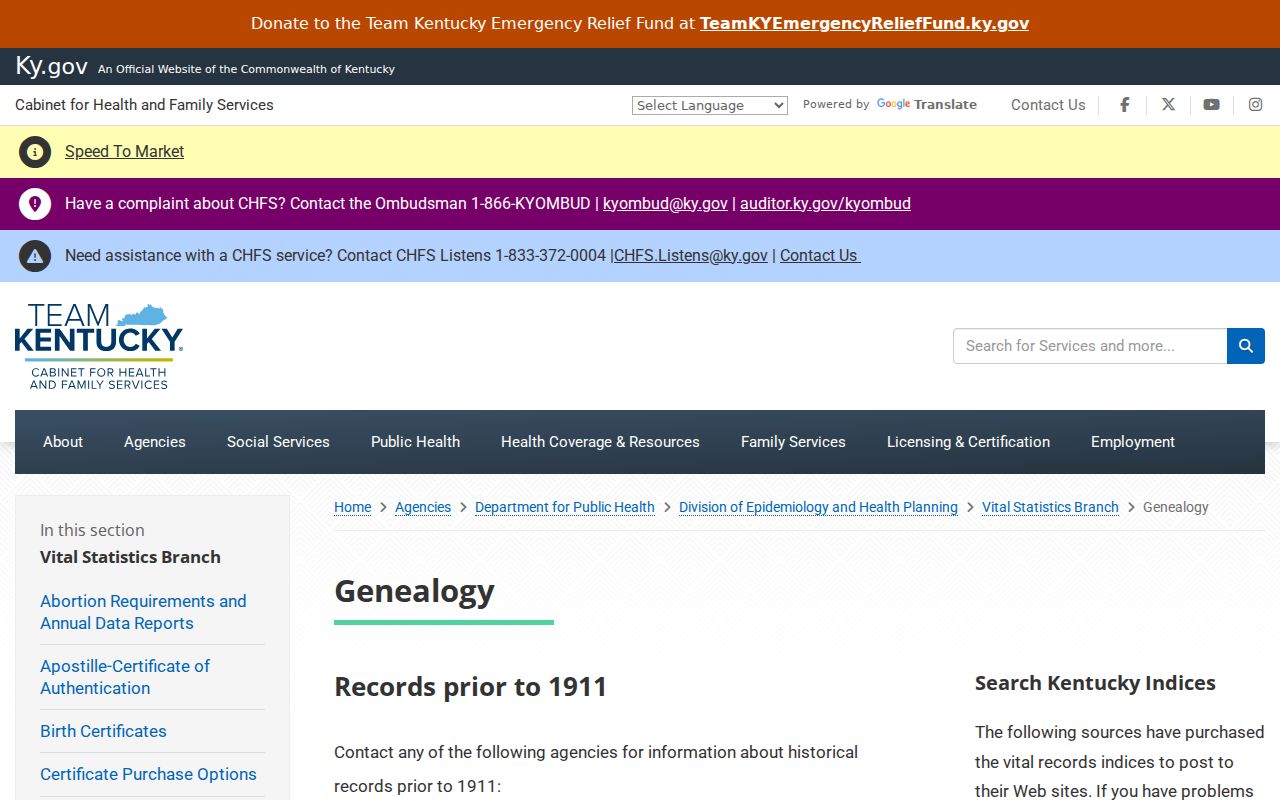
The captured page helps set the correct certificate route after a resident identity has been established elsewhere.
McCracken probate is handled by the Circuit Clerk division at (270) 575-7273. Search available court or KDLA indexes, then ask for the public docket or file. No unrestricted local probate-name portal or exact copy fee was verified, so a dated, specific request is the sound fallback.
Paducah's Original Address Frame
A historical marker describes Paducah's 1830 plat as twelve blocks between Oak and Fourth, Clark and Jefferson, and the river. That fixed frame helps place an early lot even when a modern address is absent. Use the original plat, deed legal description, Sanborn block, directory street section, and cross streets together.
No verified Paducah street-renumbering table was found. Do not assign a renumbering year. If an old number fails, search by lot and block, compare neighboring addresses in the same directory, and inspect the matching Sanborn and PVA image. A parcel split, road change, annexation, or new structure may also explain the mismatch.
Note: Keep the year beside every Paducah address; the same number can point to different evidence as the block changes.
McCracken DocAlert Serves One Purpose
McCracken DocAlert is a free notification service that emails a registrant when a deed or mortgage is filed in the selected personal or business name. It is useful after an address-history project, because a new filing can be flagged for review. It does not search previous residents and does not replace the deed index.
The official McCracken DocAlert page explains registration.
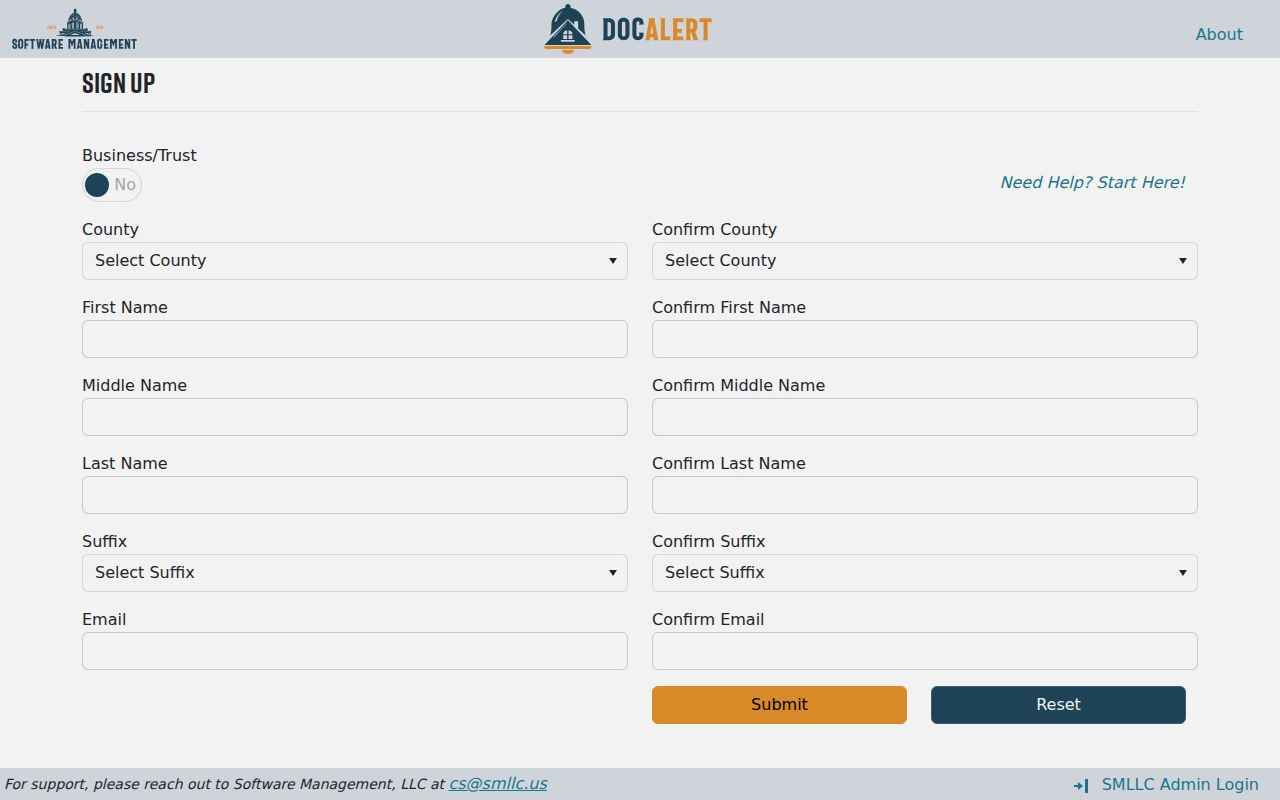
The image distinguishes a current filing alert from the backward deed research needed for past residents.
What Previous Residents Records Prove
Title and occupancy must remain separate. A deed proves a recorded land interest, not that the grantee lived at the situs. A directory entry is dated evidence that a publisher associated a name with an address. A census schedule records a household in an enumeration, while an obituary or probate file may show relationships and later events. Use two independent records when identity is uncertain.
Previous residents research works best for family history, an estate question, or the history of a house. Record conflicts openly. A different mailing address, similar name, missing directory year, or changed number is evidence to resolve, not a gap to fill with an assumption.
Lawful use. Use Paducah previous residents records for legitimate house history, family research, and estate work. Never use the results to track, stalk, harass, or harm a living person.